
A insulated containers is a passively insulated container – it needs no power connection and dampens temperature fluctuations instead of actively cooling. This page explains the difference from a refrigerated container, the construction, what the insulation does and which uses make buying one worthwhile.
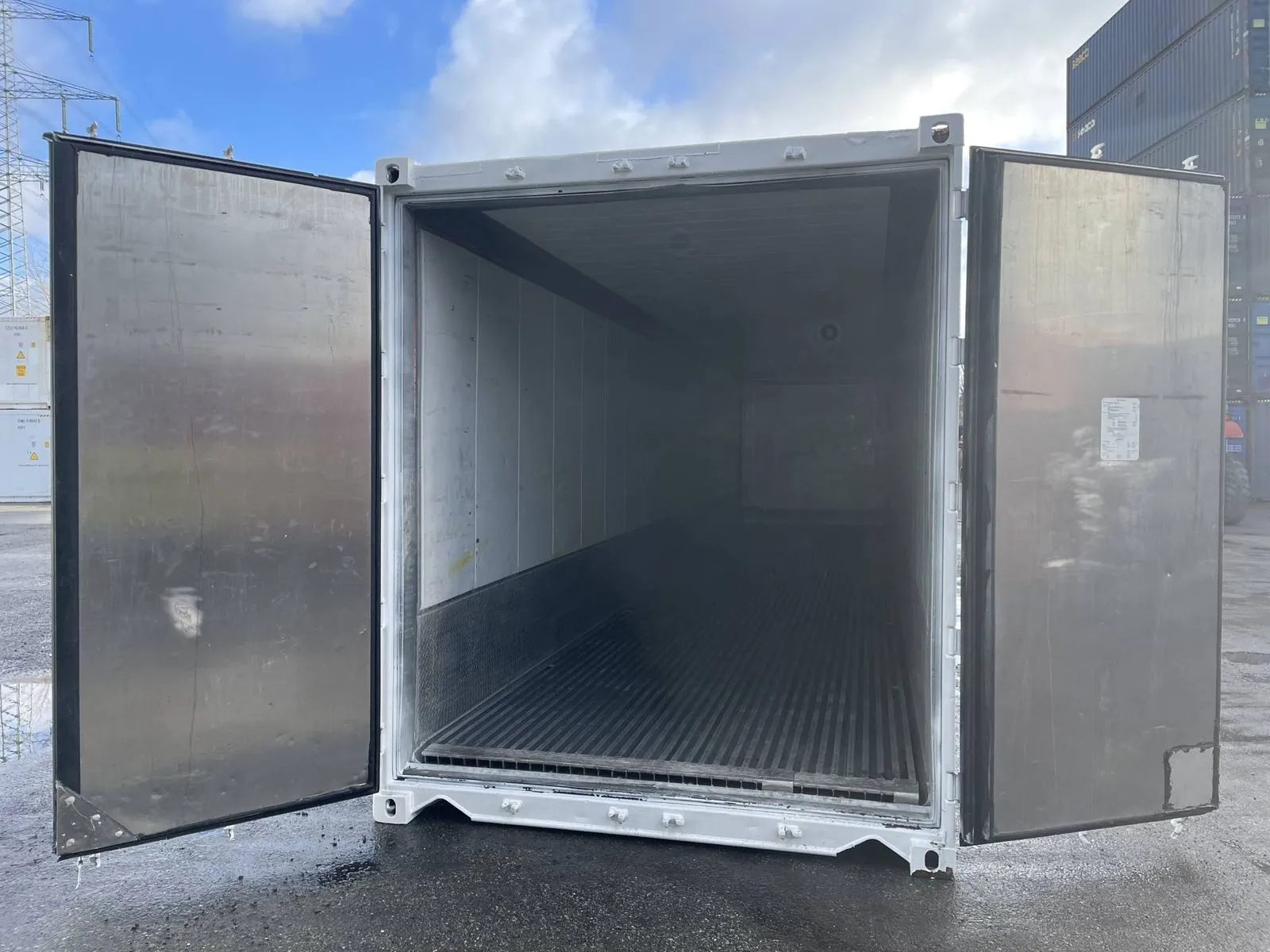
Insulated containers available
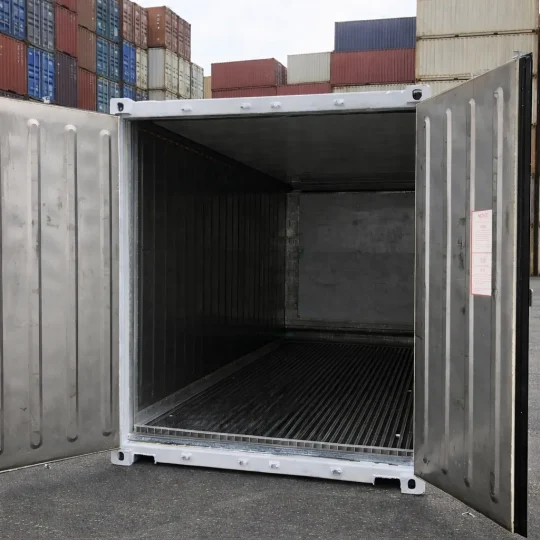
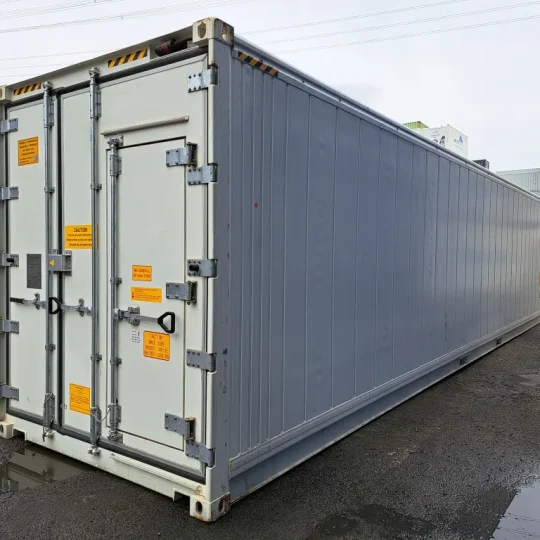
Insulated container or refrigerated container?
| insulated containers | Refrigerated containers (reefers) | |
|---|---|---|
| Principle | passively insulated | actively cooled with a refrigeration unit |
| Power connection | not required | required (400 V / generator) |
| Temperature | dampens peaks, no target temperature | maintains the set target temperature |
| Operating costs | none | Electricity + maintenance |
| typical for | frost-free storage, buffer storage, equipment room | food cold chain, catering |
If you need a constant temperature, you can't do without a Refrigerated containers . For frost protection and dampened temperature peaks, the insulated container is sufficient.
How is an insulated container built?
From the outside in: galvanised or painted steel outer skin, a PU foam core of about 60 to 100 mm in the walls, roof and floor, and an inner lining made of GRP, aluminium or sheet metal, which is easy to clean. The floor is usually aluminium T-profile or GRP. Many insulated containers are former refrigerated containers with the machinery removed; new-build units are also available.
What the insulation does – and what it doesn't
The insulation delays heating up in the sun and cooling down in winter and keeps the interior temperature much more even than in an uninsulated steel container. However, it does not maintain an none active target temperature: on hot days the interior temperature rises slowly, and in sustained frost only additional heating helps. A true cold chain requires technical equipment.
Applications
- Frost-free storage for paints, varnishes, liquids, beverages
- Buffer storage for temperature-sensitive goods before further processing
- Electronics and technical containers – more even climate for equipment
- heatable staff room or break room with low heating requirements
- Conversion base, if insulation would be needed anyway
Sizes and condition
Insulated containers are available in 10, 20 and 40 ft, new or used (often as a former reefer). When buying used, the condition of the inner lining and the door seals matters most. More on condition grades: buy used shipping containers. Dimensions: Container dimensions and sizes.
What to look for in a former refrigerated container
The most common insulated container on the market is a decommissioned reefer. Three points determine the quality: first, the inner lining – cracks or detached areas in the fibreglass (GRP) cladding let moisture into the insulation core, which permanently loses performance as a result. Second, the door seals, which are the most heavily stressed parts on refrigerated containers; they can be replaced, but should be factored into the price. Third, the opening left by the removed refrigeration unit at the front end: it must be properly sealed and insulated, otherwise there is a large thermal bridge at the most important point. If in doubt, ask for photos of the front wall from the inside.
How much does an insulated container cost?
An insulated container costs more than a standard container of the same size, but significantly less than the running costs of an actively operated refrigerated container. The price depends on the size, condition and type of the inner lining. All cost factors: How much does a shipping container cost.
Retrofit insulation instead of buying?
If you already have a standard container, retrofitting insulation can be worthwhile. Materials, layer structure and sources of error: Insulating containers.
Frequently asked questions
What is an insulated container?
A passively insulated container. It needs no power connection and dampens temperature fluctuations instead of actively cooling.
Insulated container or refrigerated container?
If you need a constant target temperature, choose a refrigerated container. For frost protection and dampened temperature peaks, an insulated container is sufficient.
How is an insulated container insulated?
With a PU foam core of about 60 to 100 mm in the walls, roof and floor, steel on the outside, and an easy-to-clean inner lining made of fibreglass (GRP), aluminium or sheet metal.
Enquire now
Describe the intended use and the size you need – we will recommend an insulated or refrigerated container and give you the price including transport. Request a quote · Overview: Buy a container
Zuletzt aktualisiert: 7. November 2026 · Redaktion: Coin Container Team, Hamburg