
A Residential container is an insulated, walk-in room container with windows, electricity and heating – usable as site accommodation, temporary housing or a weekend retreat. There are three ways to get one: rent, buy or having a shipping container converted. This page is your guide.
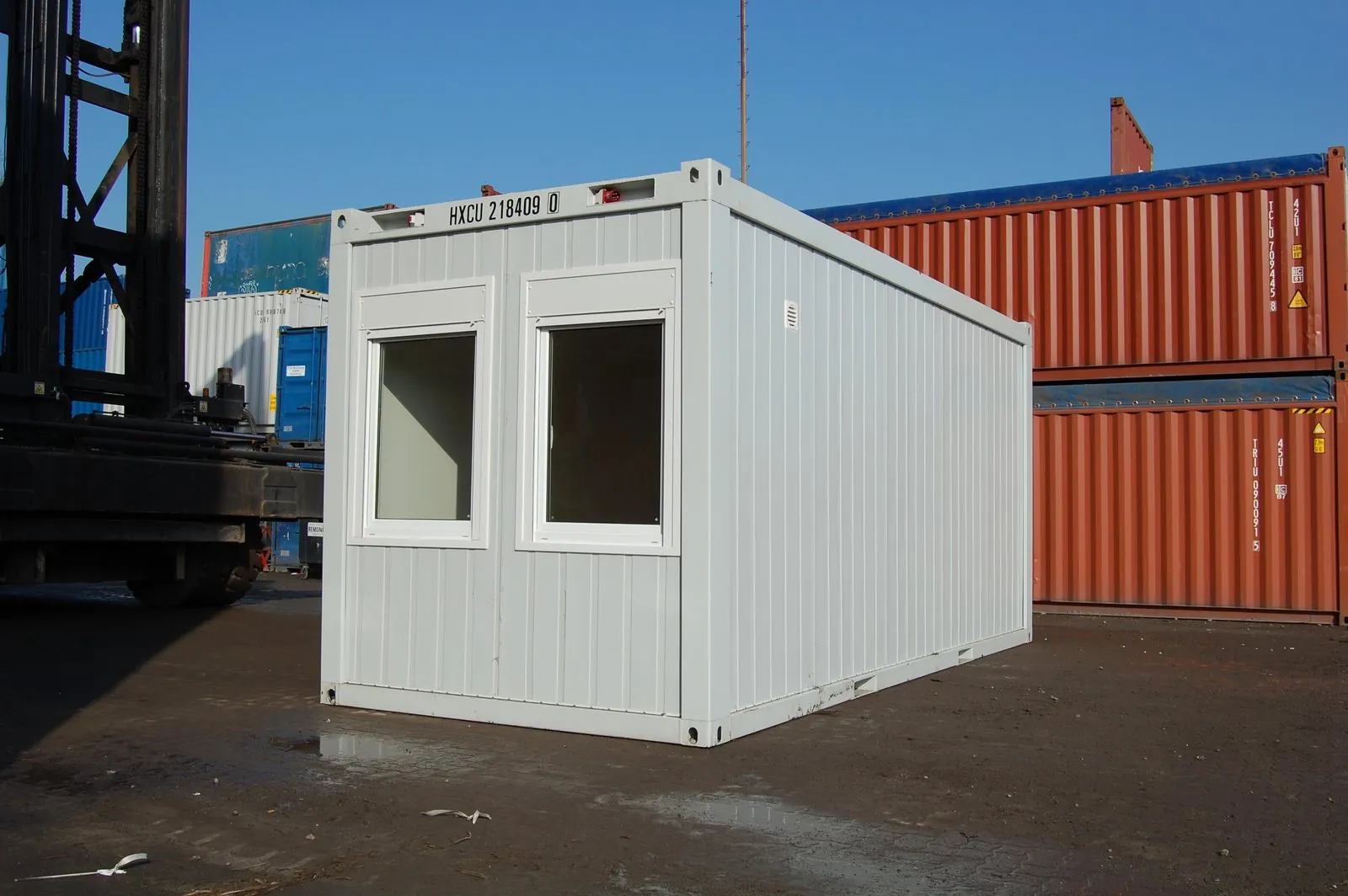
What is a residential container?
Technically, a residential container is almost identical to an Office containers: insulated walls, floor and ceiling, double-glazed windows, electrical installation, heating, often a sanitary module. Modules are available in 10 ft and 20 ft sizes and can be coupled into larger units. Whether it is called a residential, office or break container depends on its use, not its construction.
Does a residential container need a building permit?
As a rule, yes. As soon as a container is used for permanent human occupancy , it is a building under building law – unlike a container used purely for storage, which in many federal states is exempt from permit procedures up to a size limit. The state building code, the duration of use and the location are decisive. Clarify this early with the building authority. All cases at a glance: Shipping container building permit.
Renting, buying or converting – which is right for you?
| Option | Best for | Lead time | Customisation |
|---|---|---|---|
| Rent | temporary use of up to approx. 12 months | short – modules are ready for use | Standard floor plan |
| Buying a prefabricated module | permanent need, standard requirements | medium – depending on availability | limited, modules can be coupled |
| Converting shipping containers | custom floor plan, special look or equipment | long – planning, trades, inspections | freely configurable |
The decision depends less on price than on period of use and lead time: If you need accommodation in four weeks, you rent. If you want a building with its own character, you plan the conversion with a lead time of several months – including the building permit application.
Renting a residential container
Renting is the right route for temporary projects: construction site accommodation, temporary housing after property damage, staff accommodation, and club and event use. The modules arrive ready to use, can be linked together, and are available for a minimum rental period of one month. For an overview: Rent a container. For the Hamburg area: Renting a container in Hamburg.
Buying a residential container
Buying pays off if you need the container for roughly 12 to 18 months or longer. You have two options: a fully fitted-out residential module or a standard container that we convert to your specifications. Renting vs. buying, with a sample calculation: Buy or rent a container. For buying: Buy a container.
Converting a shipping container into a residential container
If you want a custom floor plan, you convert a shipping container. A suitable base is almost always a High Cube, because enough headroom remains after interior insulation. You will need: insulation in accordance with the Gebäudeenergiegesetz, windows and doors with frame reinforcement, an electrical installation with inspection, heating and – if desired – a plumbing connection. On the sequence of work and the trades involved: Converting shipping containers – ideas and costs. On insulation: Insulating containers. We organise the conversion for you: Container conversion.
Features at a glance
- insulation – walls, floor, ceiling; for permanent use according to GEG
- Windows and doors – insulated glazing, lockable exterior door
- Electrical – circuits, distribution board, test report
- Heating – electric convector, infrared or split air conditioner
- Plumbing – toilet, shower, fresh and waste water connection or tank
- Floor structure – new floor with insulation in the floor build-up
Residential containers in winter
The critical point in winter operation is not heating output, but moisture: people give off water vapour, which condenses at every remaining thermal bridge – door frame, window reveal, floor junction – and causes mould there. A winter-ready residential container therefore needs a continuous insulation layer, a tight vapour barrier and planned ventilation, in practice usually a ventilation unit with heat recovery or at least regular, disciplined purge ventilation with the windows fully open. Water pipes must be laid frost-proof or be drainable in winter. If you plan for these three points, a container building will give you no other problems in winter than a masonry one.
Frequently asked questions
Does a residential container need a building permit?
In most cases, yes. As soon as a container is used for people to stay in permanently, it counts as a building under building law. The state building regulations, period of use and location are decisive. Clarify this early with the building authority.
What is a residential container?
An insulated, walk-in room container with windows, electricity and heating, usable as construction site accommodation, temporary housing or a weekend retreat.
Rent, buy or convert?
If you need accommodation in four weeks, you rent. If you want a building with its own character, you plan a conversion with a lead time of several months, including the building permit application.
Enquire about your project now
Tell us whether you want to rent, buy or convert and how long and for what purpose the residential container will be used – we will suggest the right solution. Request a quote
Zuletzt aktualisiert: 7. November 2026 · Redaktion: Coin Container Team, Hamburg