Guides & basics
A Buying a container wirkt einfach: Größe auswählen, Preise vergleichen, bezahlen. In der Praxis entstehen „teure Fehler“ dann, wenn der Zustand des Containers nicht zur Aufgabe passt oder wenn kritische Prüfungen übersehen werden: CSC-Plakette, Zustandsklasse (IICL / Cargo Worthy / As Is), Geometrie/
Below you will find the most common loss scenarios and concrete steps to minimise risks.
1) You need a container for transport – but buy one that is only suitable for storage (or vice versa)
This is the most common "loss of money": a container can be perfectly fine for stationary storage but unsuitable for transport. Conversely, some customers pay too much for features they do not need at all if the container is only going to stand on site.
How to avoid this: Tell us before payment what the container is intended for: storage / warehouse; for conversion; for transport.
Wir wählen passend zur Aufgabe die richtige Zustandsklasse (IICL / Cargo Worthy / As Is) und erklären in einfachen Worten, was das für Sie konkret bedeutet: Boden, Türen, Korrosion, Dichtheit und mögliche Arbeiten. Wenn der Container für den Transport geplant ist, gehen wir sofort zu den Prüfungen aus Punkt 5 (CSC) über.
2) Wrong container type chosen for the task
As a guide:
Special containers:
- Double Door container – access from both ends (practical for long goods/
forklifts). - Open Side container – full side access (special loading, dispensing/
display, "cabinet" storage). - Open Top container – loading from above (crane) or over-height cargo.
- Hard Top container – similar to Open Top, but with a hard roof section (more protection/
robustness). - Flat Rack – for oversized/bulky goods that do not fit into a standard container body.
- Pallet Wide – optimised interior width for pallets (logistics/
storage). - Tank container – for liquids.
- Swap bodies – for specific truck/terminal scenarios, not to be confused with shipping containers.
Refrigerated containers:
- insulated containers – insulation without active cooling.
- Refrigerated containers (reefers) – active cooling; clarify right away: temperature range, power supply/
connection, installation site.
How to avoid this: Tell us three things: What do you store/
3) New vs. used: used is not always cheaper – the "savings" get eaten up by retrofitting
A used container can make sense – but this is where many customers lose money on small items that add up.
Where the savings often disappear:
Floor: wear, stains, local repairs, covering/
renewal depending on use Doors & seals: so that they close properly and nothing gets in
Corrosion: sometimes cosmetic, sometimes repairs to load-bearing areas
Appearance: if the container represents your business (kiosk/
pavilion), preparation & painting are often underestimated Reefer: condition of the refrigeration unit, electrics, actual connection conditions on site
How to avoid this: Instead of "What is cheaper?", tell us directly what you want to end up with. This way you avoid "bought cheaply – expensive to finish".
4) Confusing condition grades – and not documenting exactly what is being bought
The condition grade is not a "marketing phrase" but a clear agreement on the expected condition. That is why the quote/
How to avoid this:
- Have the condition grade explicitly stated in the quote/invoice.
- Ask for a brief explanation of what this grade covers in your case: watertightness, floor, doors, corrosion, possible patches/
repairs. - Define clear limits: what is acceptable (scratches/
dents) – and what is not (holes, leaks, problematic doors, critical frame corrosion).
5) Formal criteria (CSC etc.) – only if the container is to be transported
If the container simply stays in one place at your site (storage or conversion), you usually don't need to go into "transport formalities" in detail.
However, if you transport the container with cargo (between cities/
CSC plate – a metal plate (usually on the doors) confirming that the container is approved for international transport and showing basic technical data/
Why this saves money: If the plate is missing or there are problems with it, rejection/
How to avoid this: If the container is intended for transport, clarify this before buying – then the necessary documentation/
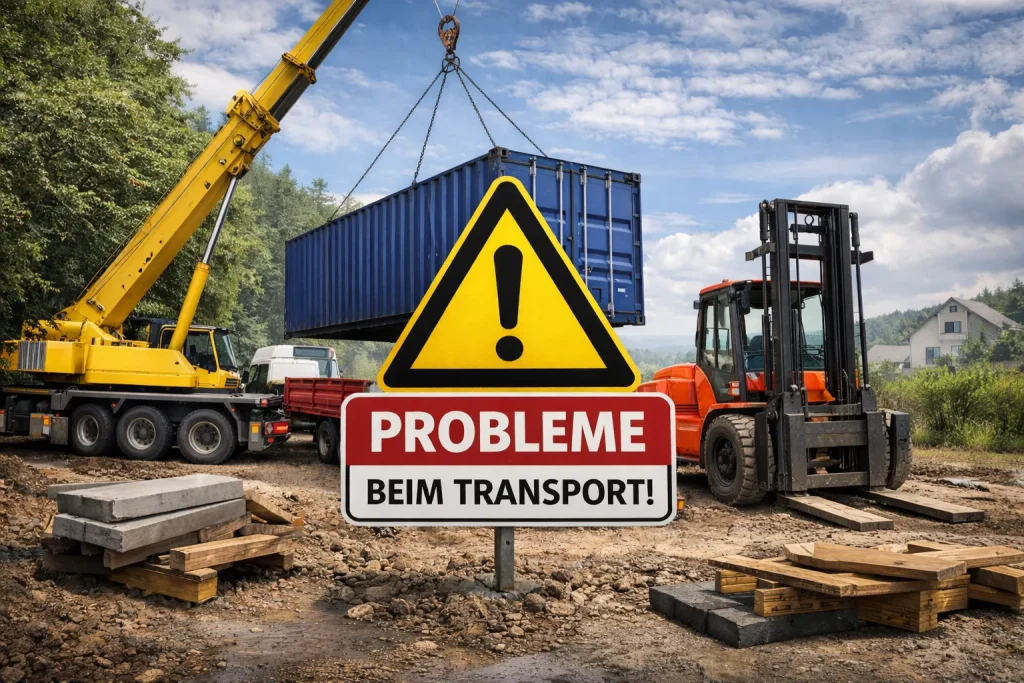
6) Delivery and offloading not planned properly
This point is important: the most common reason for additional costs is missing or difficult access. The container may be perfect – if the truck cannot reach the site or offloading cannot be done safely, costs arise from waiting time, a second trip or additional equipment.
How to avoid this:
Check access: width, bends, gates, ground surface
Clarify equipment: crane / loader crane / forklift
Prepare the ground: plates / supports / levelling (otherwise doors can "bind")
Define the placement spot (so that repositioning at your expense is not necessary)
7) No proper inspection carried out
Decisions made "based on two side photos" are almost always risky. A minimum check covers four risk zones:
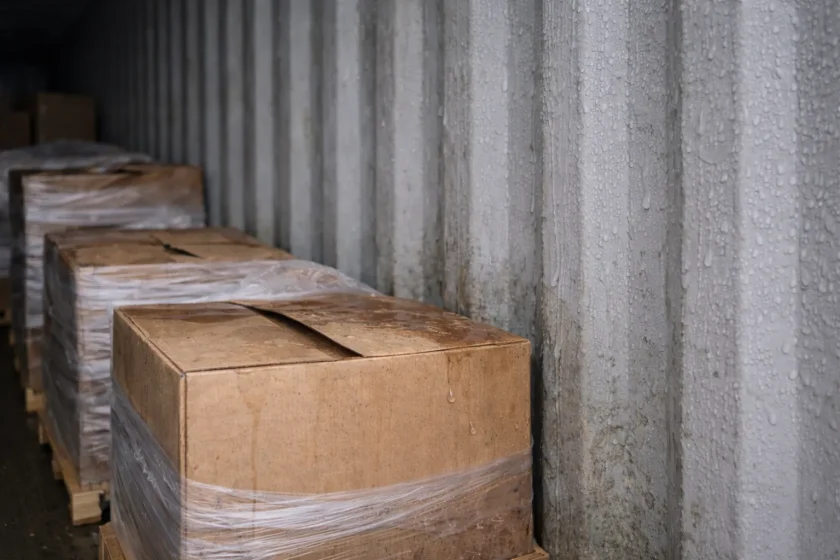
Roof & upper seams: patches, cracks, signs of leaks
Floor: Sagging, cracks, stains/
odours Doors: geometry, seals, closing behaviour
Frame/
underside : corrosion on load-bearing areas, deformations
Practical note for office/sanitary containers and conversion projects
At office and sanitary containers as well as conversion projects the money often does not go into the container itself, but into preparation and technical systems: electrics, water/
We pay particular attention to details here, because seemingly small points (location, existing connections, usage profile) determine budget and schedule. If you briefly tell us what you want to achieve (kiosk, office, workshop, sanitary facilities), we will recommend the type and equipment. On request, we modify the container to suit your needs (e.g. cut-outs, doors/
In summary in most cases you don't lose money on the container price, but through the wrong choice and skipped checks: condition grade, CSC (if transport is planned), inspection, logistics. If you work through these points before paying, the purchase becomes predictable: you know what you are getting, what it really costs and which work may be necessary. Go through this page's checklist systematically – then your budget stays under control, without "surprises" after the purchase.
You'll find more of our real team and project life on our social media:
Looking for a container?
Coin Container delivers new and used shipping, storage and office containers across Europe from regional depots – with verified condition and a dedicated contact person. Overview: Buy shipping containers.
Request a quote