Guides & basics
Containers are reliable solutions for storage, construction sites and logistics. However, sun, heat, frost and sharp temperature fluctuations affect both the container itself (doors, seals, fittings) and the goods inside. If you prepare the container for the season, you can significantly reduce the risks of condensation, problems opening the doors and damage to temperature-sensitive goods .
At Coin Container you can choose shipping, storage and specialty containers – new or used – for purchase or rental, including delivery as well as modification and conversion services.
Why seasons matter for containers
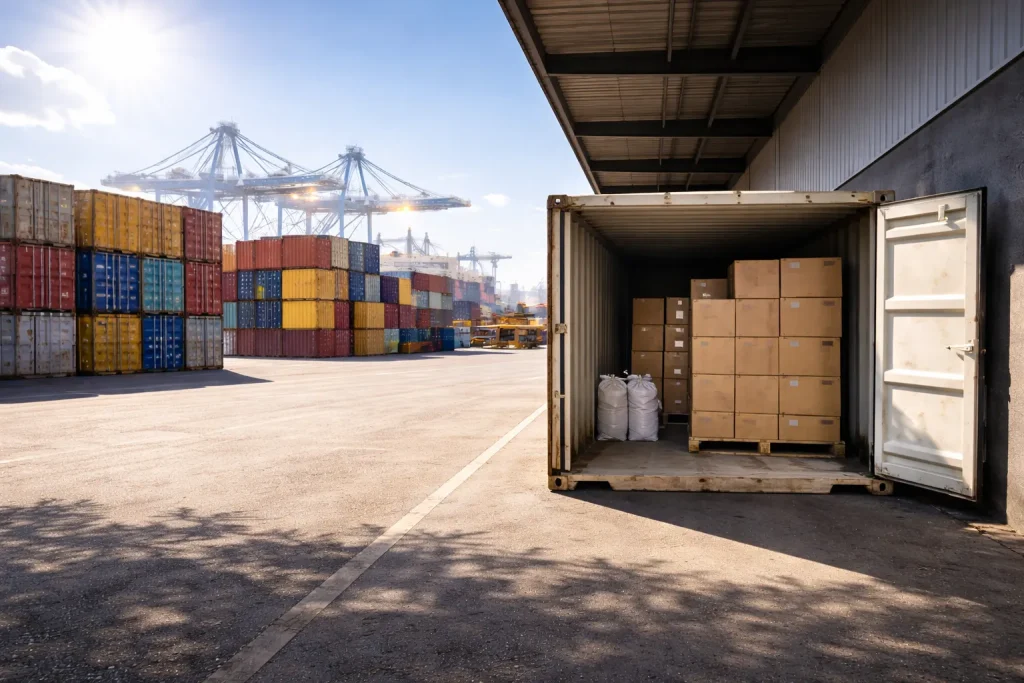
Containers are made mainly of steel. The material expands in heat and contracts in cold. Combined with sun, precipitation and moisture, this creates typical seasonal challenges:
- Doors and locking mechanisms can become stiffer to operate
- Seals wear out faster due to UV/heat or frost
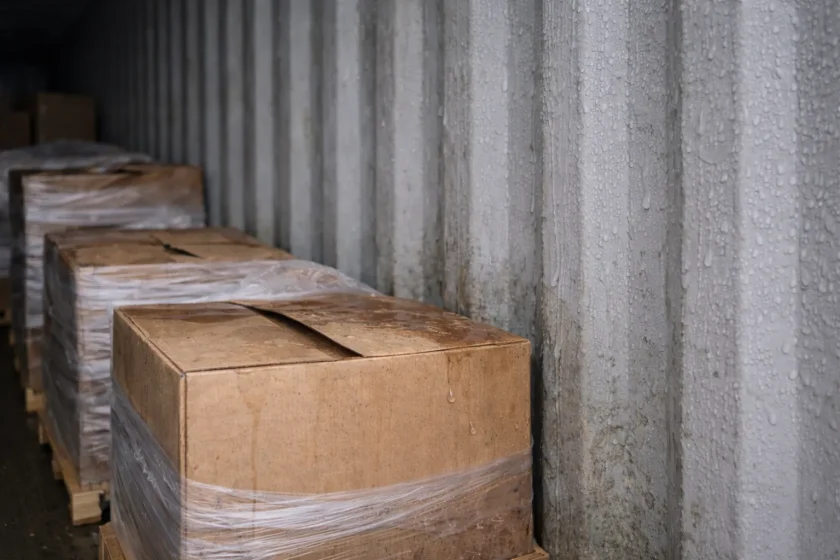
- Condensation forms when humid air cools down (dew point)
- Packaging and goods can be damaged by moisture and temperature peaks
Important: The microclimate inside the container depends heavily on external conditions and many other factors – without a specific usage scenario, it cannot be exactly "predicted".
Summer: heat, sun, UV – what really works
Typical summer problems
- Severe overheating in direct sunlight.
- Damage to temperature-sensitive goods (e.g. electronics, adhesives, plastics, food)
-
condensation caused by the difference between day and night temperatures or by damp goods/
packaging
How hot can it get inside?
As a guideline: At an outside temperature of 25–30 °C, the air temperature inside the container can, under unfavourable conditions (direct sun, no shade, no ventilation), reach 50–55 °C .
What helps in summer
Choice of location:
- If possible, place the container in the shade (e.g. next to buildings or under a canopy) – this noticeably reduces temperature peaks.
Correct placement of goods (so that "it can breathe"):
- do not press goods directly against the wall or ceiling: leave an air gap
- use pallets: do not store anything directly on the floor
Minimise sources of moisture (this is the key to preventing condensation):
- only store dry goods, dry pallets and dry cardboard packaging
-
do not put wet tools/
materials into the container after rain or cleaning - do not store open containers of water, wet rags or damp sacks in the container
-
if the goods are "steaming" (e.g. straight from cold storage/
from outside), let them acclimatise before you close the container tightly -
use dehumidification if needed: moisture absorbers/
dehumidifiers (especially helpful for storage use)
If technical solutions are needed: better to implement them as a conversion:
-
Ventilation, insulation, electrical work, additional openings or equipment should be carried out professionally as a modification/
conversion.
When it makes sense to consider a different container type
Sometimes a standard container is not enough – not because it is "bad", but because temperature and humidity inside it are difficult to keep stable. You should consider switching container type if:
- the goods are temperature-sensitive (risk of spoilage, deformation or loss of quality)
- the container is used for storage permanently, all year round
- condensation occurs repeatedly even though moisture sources have been removed and the goods placed correctly
- it is not just about "reducing risks" but actually maintaining a defined temperature range
Then there are two basic options:
Winter: frost, snow, icing – how to keep your container operable
Typical winter problems
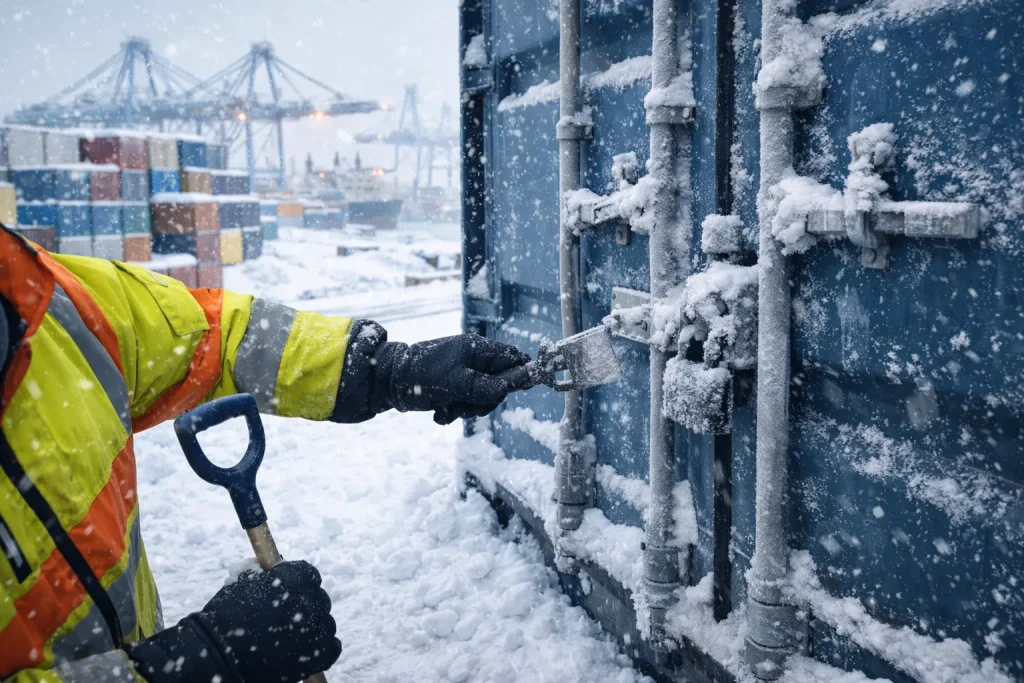
- Doors and locks can freeze, making the container hard to open
-
Seals become hard in frost, creating gaps/
draughts - Snow and ice hinder access and can block doors
- Temperature changes cause condensation inside (in winter this is often the main problem)
What to do in winter
Doors and the area around them have priority:
-
regularly clear snow and ice from the door area, the threshold and the hinges/
frame - remove ice before opening so that seals do not tear and fittings are not damaged
Seals and fittings:
- check the seals (cracks, hardening)
- make sure no water that could later freeze collects on the contact surfaces
Roof and safe use:
- check that no heavy wet snow accumulates on the roof; remove it if necessary (especially after a thaw)
If the goods cannot withstand frost or large fluctuations
If stable conditions are required , a suitable container type is advisable:
How to avoid condensation in the container (the number one issue all year round)
Condensation forms when humid air cools down to the dew point cools down – water condenses on cold surfaces (walls/
Practical rules against condensation:
- store only dry goods and dry packaging
-
leave an air gap from the walls/
ceiling and use pallets - platzieren Sie die Ware so, dass sie die „kalten Zonen“ nicht direkt berührt.
- Wenn Kondenswasser wiederholt auftritt, lohnt sich der Wechsel auf einen isolierten Container.
Short checklist: seasonal preparation
Before summer
- check the location: is it possible to shade the container?
- plan the loading with air gaps
- check possible sources of moisture (packaging, pallets, goods)
- consider an insulated or refrigerated container for sensitive goods
Before winter
- make sure doors and frames are clean and no water collects that could freeze
-
check the seals and the smooth operation of the doors/
fittings - keep the interior dry (condensation risk)
- regularly remove snow and ice from the door area and the roof
- if the goods cannot tolerate frost: use an insulated or refrigerated container
Quick guide to solutions
- Standard container:
Suitable for most purposes if the goods are not temperature-sensitive. - Insulated container:
Suitable if the effect of heat/cold needs to be reduced and more stable conditions achieved without a refrigeration unit. - Refrigerated containers:
Suitable if a defined temperature must be maintained (e.g. food, pharmaceuticals, sensitive goods); requires a power supply.
Conclusion
A container can be used efficiently all year round if the location, loading and moisture control are right. In summer, the main risks are overheating and moisture inside the container (which causes condensation). In winter, they are icing of doors/